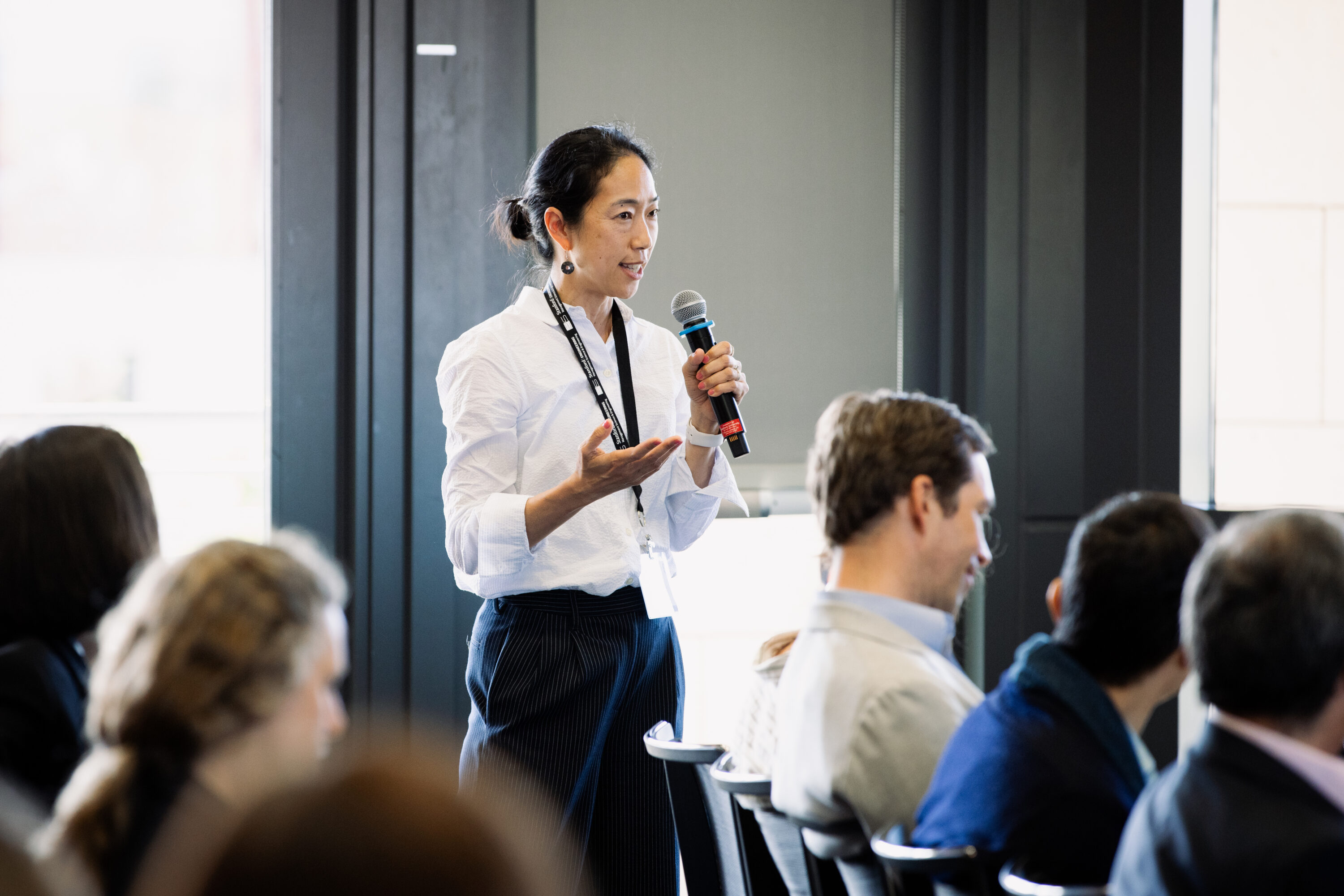
Empathy, Community, Impact: Heidi Roizen on the Threshold Venture Fellows Program

Heidi Roizen is a trailblazer in Silicon Valley venture capital and has championed a more relational, humanistic approach to professional practice – always with a keen focus on mentoring the next generation. There is no greater example of this than in her role leading the Threshold Venture Fellows (TVF) program at Stanford Technology Ventures Program. STVP executive director Ash Wallington sat down with Heidi to explore the evolution of the TVF program, reflections on community-building, and the secret to great mentoring moments.
Ash: How did you first get involved with STVP?
Heidi: In 2010, STVP’s Professor Tom Byers asked me, “If you could teach anything to aspiring entrepreneurs at Stanford, what would it be?” Having spent years in Silicon Valley, my vision was clear: “I would love to hand pick a small group of students, and talk with them about the big things.” While that wasn’t possible at first, I started by teaching “The Spirit of Entrepreneurship,” running seven classes of more than sixty students each over four years. Those relationships sparked deeper connections across Stanford and the Valley.
Ash: It sounds like the teaching work was highly rewarding. What led to ultimately developing the Threshold Venture Fellows Program?
Heidi: In 2014, Tom and STVP’s then-Executive Director Tina Seelig reached out to me because Stanford wanted to create more cohort-based communities for graduate students in engineering. I still had my original vision in mind, and once we secured support from my firm, Threshold Ventures, the Threshold Venture Fellows Program was born at STVP. TVF is now entering its eleventh year! Isn’t that crazy? And yet, after all these years I still find myself continuously energized and inspired by the students in each program.
Ash: What are the aims of TVF?
Heidi: For me, everything starts with community, and the greatest sign of success is that the community truly thrives and supports one another – not just while they’re at Stanford, but as they move through their careers. Our aim is to help increase their chances of success and to make sure they never lose sight of the bigger picture.
Ash: How do you select the students to participate in the program?
Heidi: Eclipse Ventures Partner Aidan Madigan-Curtis teaches the program with me. When we’re recruiting, we always ask ourselves, “Are we going to be proud of what they’ve achieved in their career?” Most importantly, we look for compassionate people with leadership potential and an ethical backbone. Our program’s impact comes from intentionally building that kind of community.”
Ash: Is there a particular experience from the program that stands out to you?
Heidi: What stands out is the strength of the alumni network – they’re always exchanging ideas, helping each other solve professional dilemmas, sharing job opportunities, legal questions, or even just organizing social events. The intentional emphasis on community is central to the program design. This isn’t just another class – we really focus on cohort-based connection, integrating new fellows with alumni, and helping students wrestle with personal and professional challenges that don’t always get covered in a typical course.
Ash: Do you see anything different in students today as opposed to a decade ago?
Heidi: I’ve seen students’ mindsets shift over time. Our fellows are thinking so much more about the world as a whole – about the environment, about geopolitics, about the impact of what they build. They are less motivated by money and more motivated to have a positive, ethical, and empathetic impact.
Ash: How has your involvement with the program influenced your other work?
Heidi: Everything is moving very fast. Seeing how today’s “AI-natives” approach technology as a multiplier has influenced my own outlook. They’re incredibly adept at harnessing tools to be better and faster, and it’s inspired me, too.
Ash: There are a lot of people eager to “mentor” young entrepreneurs, but it is an art that you’ve mastered. Can you give any advice for anyone considering taking a formal mentorship role?
Heidi: I point to Brad Feld’s book Give First: The Power of Mentorship, which is to remember: “This is not your rodeo.” As much as we want to teach or tell, it’s critical to be a facilitator – to give perspective and input when asked, but ultimately, to let the students take the lead on their journey.
Ash: If there’s one thing you wish students could take with them for the rest of their careers, what would it be?
Heidi: Don’t lose sight of being human. At the end of the day, what connects and defines us – both as individuals and as a community – is empathy and compassion. I hope they stay focused on the bigger picture, support each other, and remember that success is never just a straight escalator ride up.
The Threshold Venture Fellows Program is now accepting applications.