25 Years of Management Science & Engineering: Three Takeaways about Entrepreneurship Education

This spring, Stanford’s Management Science & Engineering department celebrated 25 years. Founded in 1997, STVP has been part of MS&E since the department was formed, and both have evolved alongside entrepreneurship, advancing research and education to understand and meet the ever-changing innovation ecosystem. The real-world impact of Stanford entrepreneurship is already massive.
Professor and STVP Faculty Director Chuck Eesley (pictured above) traced the evolution of entrepreneurship education from its early days, which primarily catered to MBA students, to a more inclusive, interdisciplinary approach that has enabled students from engineering and other backgrounds to address pressing global challenges like climate change and inequality.
Additionally, Professor Riitta Katila and Adjunct Professor Steve Blank discussed Stanford and STVP’s impact and the transformations in the innovation economy over the past quarter century. Known for creating the Lean Startup method, Blank’s insights have propelled countless organizations and entrepreneurs around the world.
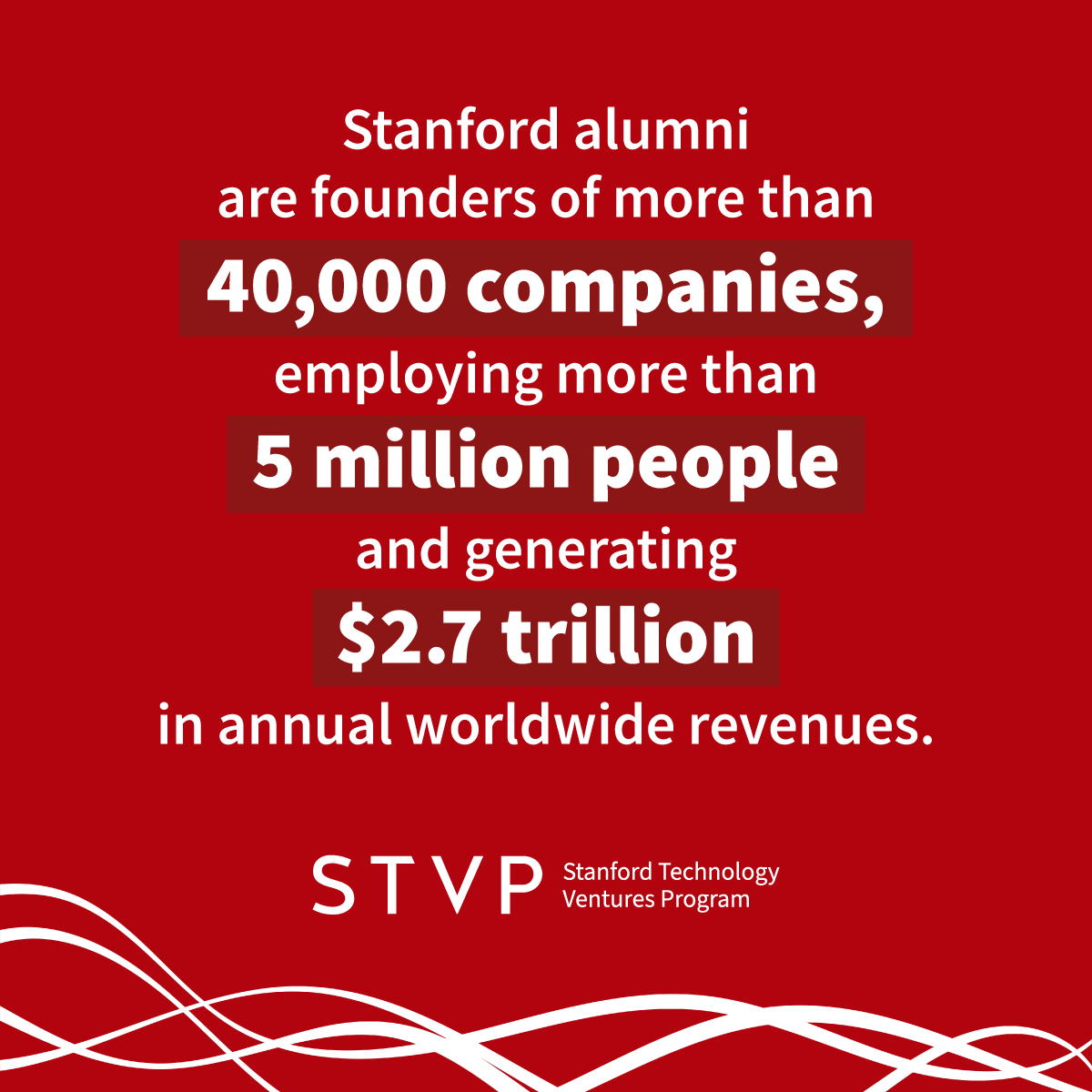
Eesley shared findings from his own research showing that Stanford alumni are founders of more than 40,000 companies, employing more than 5 million people and generating $2.7 trillion in annual worldwide revenues – engines of growth for the global economy. “With that influence also comes responsibility, to ensure that the next generation builds ventures that are more inclusive, more ethical and more mission driven,” he said. Over the decades STVP has seen shifts in entrepreneurship education in Stanford, and out in the real world. A few signals:
1. Founders are launching companies earlier and earlier in their careers.
Each successive cohort of Stanford graduates is founding more companies, and they’re doing it sooner after graduation. Students aren’t waiting until mid-career to innovate. They’re building products, raising capital, and starting ventures within years, sometimes within months of graduation.
2. Different types of exposure to entrepreneurship education and ecosystems correlate with founding activity.
This is especially true among “quick” founders – those who secure VC funding within three years of graduation. Of students surveyed 61% took entrepreneurship courses, 52% engaged in the various competitions around campus, and 58% leveraged the alumni network to start their ventures. Stanford’s range of instructional offerings, fellowship opportunities, competitions, and mentorship opportunities are instrumental for students as they develop their ideas into impact.
3. A growing proportion of future leaders are choosing Stanford and peer institutions specializing in entrepreneurship development.
This trend creates a positive feedback loop, where the more we support responsible innovation, the more top entrepreneurial talent we attract, and the greater our global impact becomes. It’s not just about what our alumni have built. It’s about who we’re now attracting and how we’re shaping the future of entrepreneurship from the moment students arrive.
Over the last quarter-century, STVP helped to prove that entrepreneurship could be taught, and that it could be a force for good. What comes next? MS&E and STVP are evolving teaching for new technologies including AI, while staying true to our values of responsible innovation and global citizenship.
“Today the stakes are higher than ever,” said Eesley. “The challenges are bigger, but so are the opportunities to build ventures that are global, responsible, and bold enough to change the world. MS&E and STVP have the chance to make what comes next the most inclusive and most transformative era for MS&E yet.”